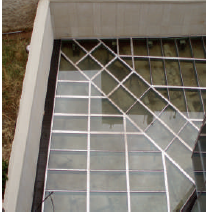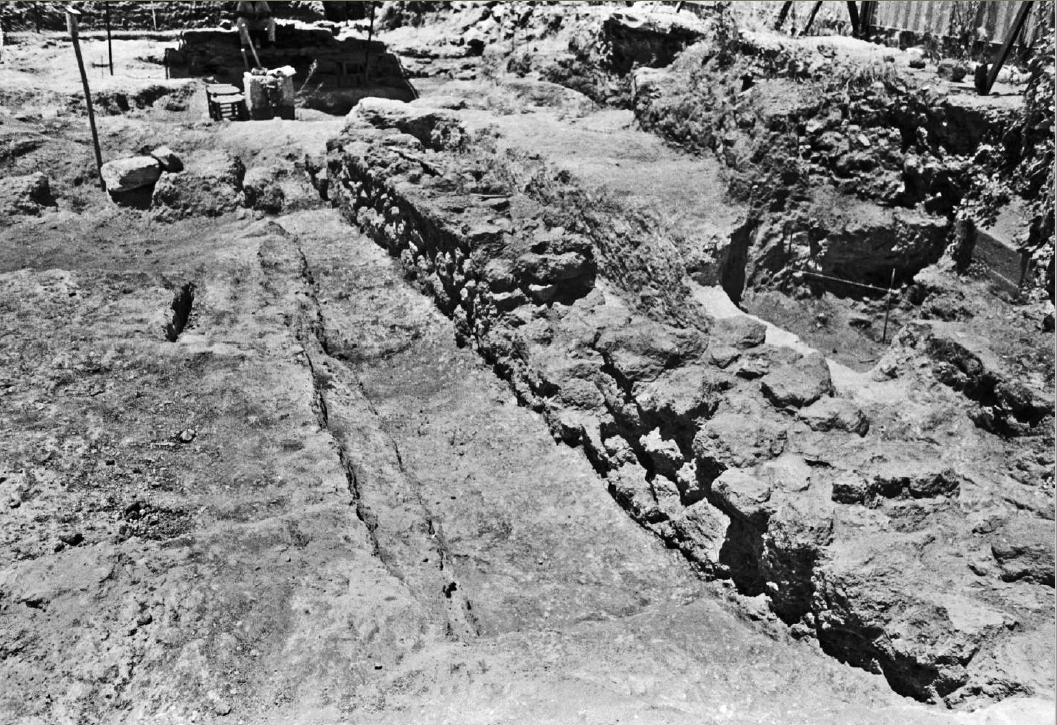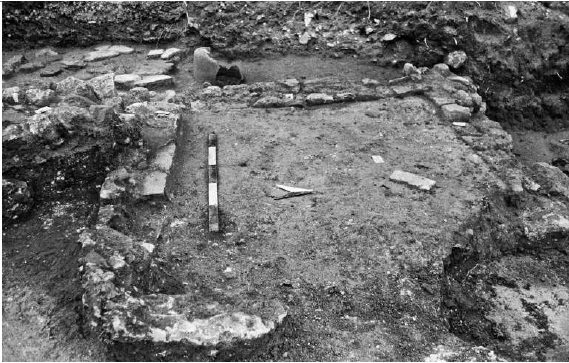
The southwest part of the Bank plot, an area of about 90 sq. m. is the best preserved and remains visible through the glass floor, in the uncovered area of the new building During the investigation of the more recent fills of the building plot, of the Ottoman rule, several incised clay pipes and examples of glazed pottery were collected. No building remains have been located since this area lies just outside the Old Town walls (extra muros). The excavation at the plot revealed successive occupation phases both of the Late Classical – Hellenistic and down to Minoan periods, while the intermediate periods are represented by abundant pottery from the rubbish pits.
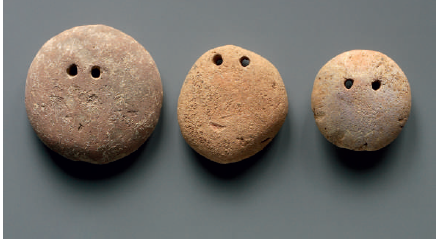
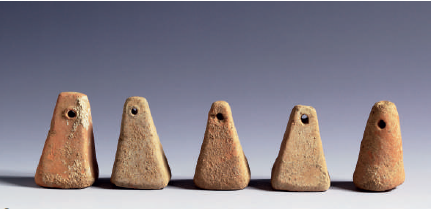
A building (“house”) with at least three recognizable building phases, dates to the second half of the 4th century until the end of the 3rd-beginning of 2nd century B.C. The walls, made of worked and rough stones, while floors are mainly made of beaten earth. Transport amphorae were embedded in two floors, obviously for storing of liquid or solid food. In the southwest part of the building a variety of several loom-weights were found lying on floor. This fact leads us to suggest that a loom had stood here. Investigation of both the building and the pits brought to light a lot of pottery, fragments from household vessels. Of particular interest is the abundance of stamped amphora handles bearing the stamp (letters or vegetal motifs) of the ceramic workshop – or even the name of the potter. Apart from these, several clay pyramidal and discoid loomweights, were collected, as well as parts of figurines
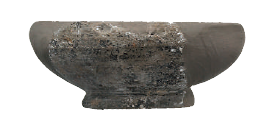
During the Archaic-Classical and Geometric periods (6th-5th and 8th-7th centuries B.C.) this site may have been used merely for dumping rubbish, but architectural remains are completely absent. An amphora of the 5th century B. C., a mortar made of coarse reddish clay of the 6th century B. C., as well as an amphoroid krater and a one-handled bowl of the 8th century B.C., stand out.
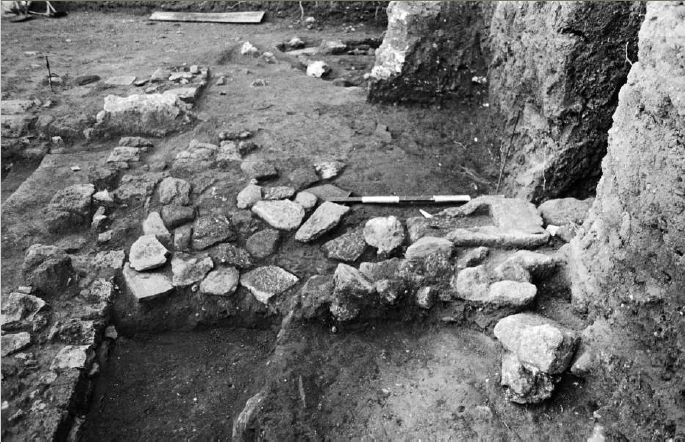
The remains of the Minoan settlement, along with two or three pits of the same era, have been discovered immediately under the Late Classical- Hellenistic activities on the site. They belong to three phases covering the period from Early Minoan II to Middle Minoan IA (c. 2600-1900 B.C.). The wall foundations consist of rough stones laid directly or in a trench in the natural rock and floors are mainly laid with beaten earth. Only two parts of slab floors, belonging perhaps to open-air spaces, have been located. In a small space to the south-west, traces of a clay hearth on an earth floor have been revealed, as well as a large broken pithos. Perhaps this was the kitchen of the Minoan “house”.
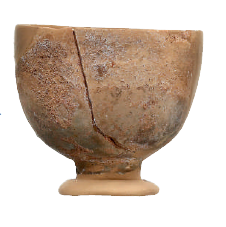
Architectural remains include an elongated space with a pebble floor, part of a cobbled path. It probably constitutes the north boundary of a building and was plastered on its south side, the direction in which its interior space extended. Among the finds of the Minoan period one can single out parts of beak-spouted jugs, “egg cups”, basins and cups, as well as everyday tools, such as a stone axe and obsidian blades.
It is evident that during the third millennium B.C., the Minoan settlement in the city of Khania occupied a comparatively large area, according to the data for those times, which began from the Kastelli hill on the north and ended at the centre of the modern town on the south. The excavation on the plot of the Cooperative Bank of Khania shows that the Early Minoan/Middle Minoan settlement stretched at least as far as this point of the city to the east.