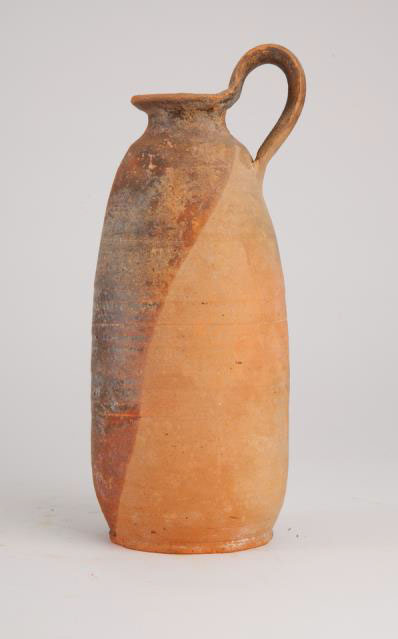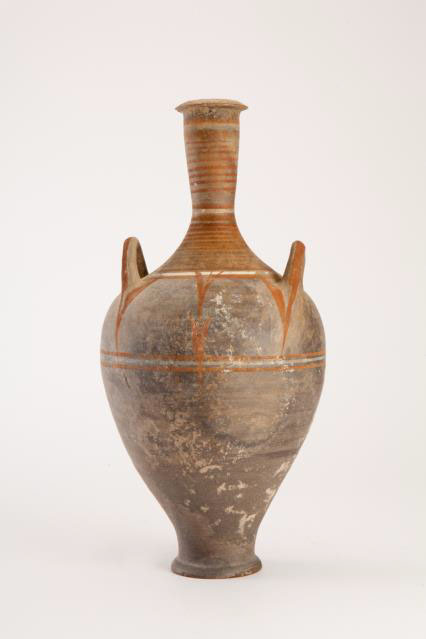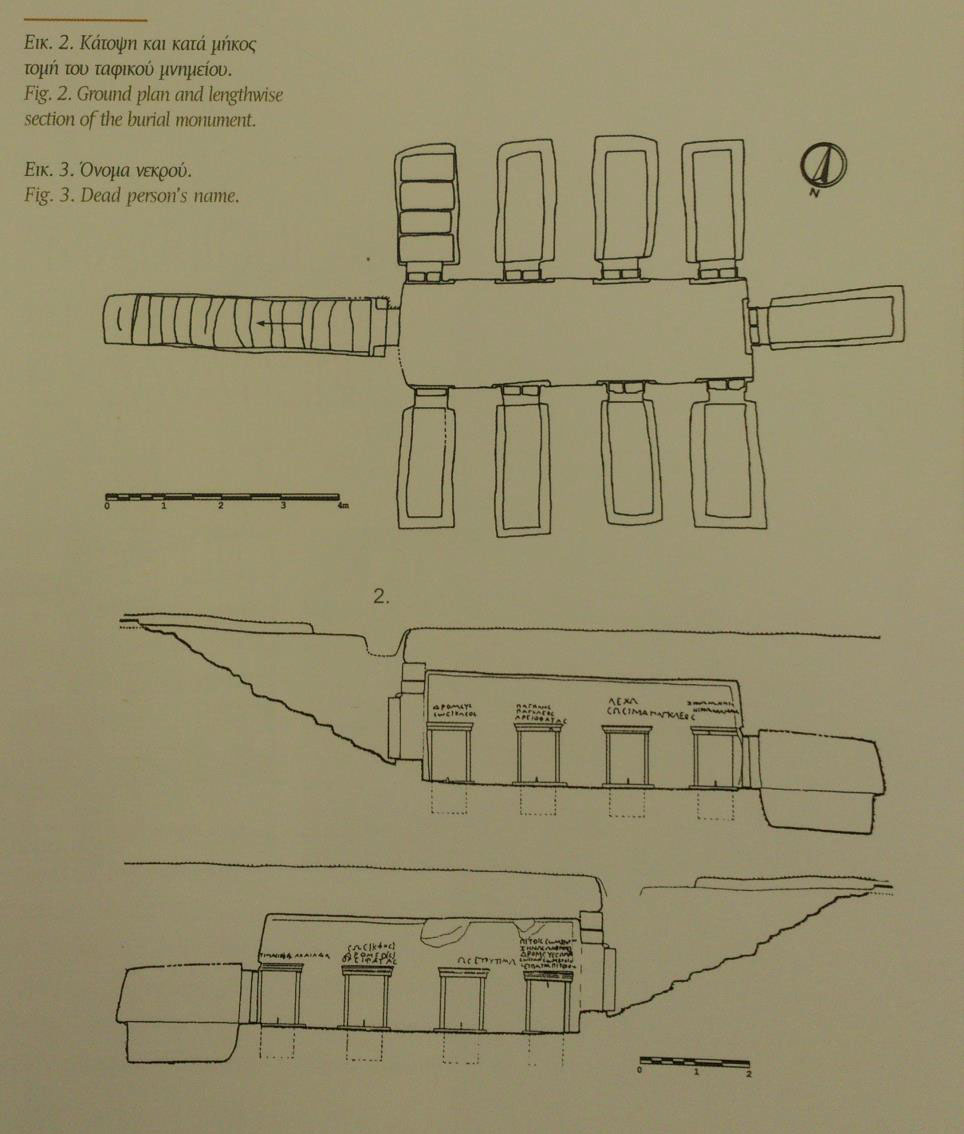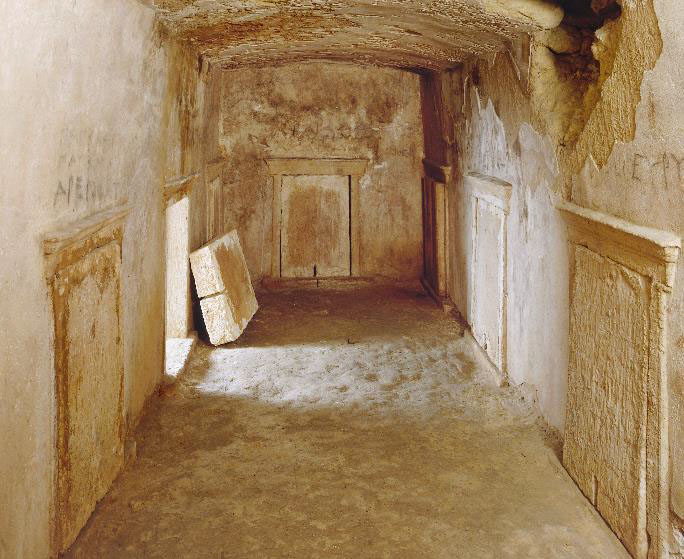
A very important and intact rockcut funerary monument came to light in 1981, during the digging works for the construction of a new house belonging to Emm. Mathioulakis. It dates to the end of the 4th-mid 3rd century B.C. The tomb is underground and accessible by means of a sloping approach or dromos, with rock-cut stair of 15 carelessly cut steps. Inside, there is a long and narrow corridor or antechamber, on the same orientation with a vaulted roof. The natural rock has been levelled off to create the floor. There were offerings here, vases as well as food (eggs, dried fruit etc.). In the sides of the corridor and at right angles to the long axis nine symmetrical burial chambers (loculi) had been opened, four on either side and one at the narrow end opposite the entrance.
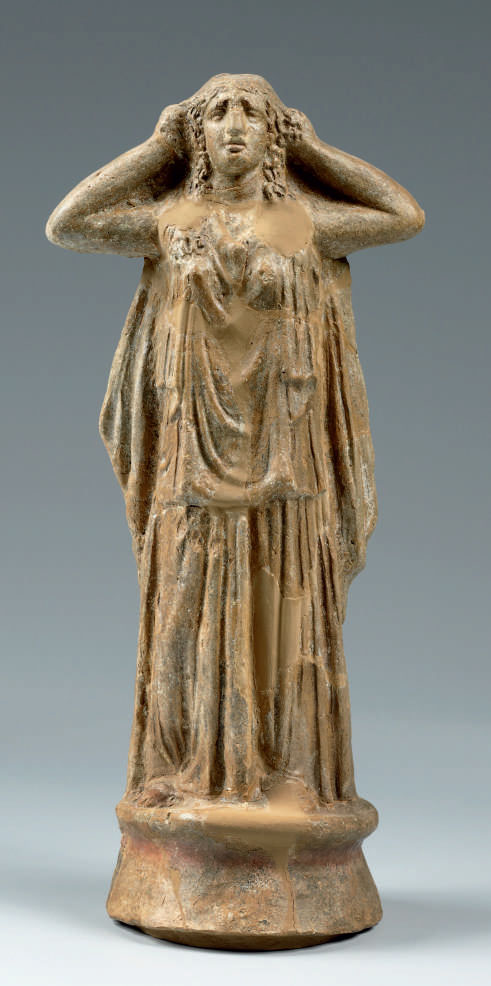
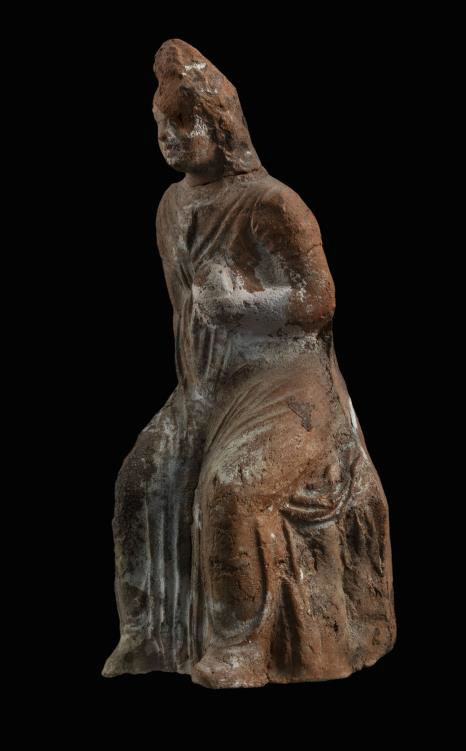
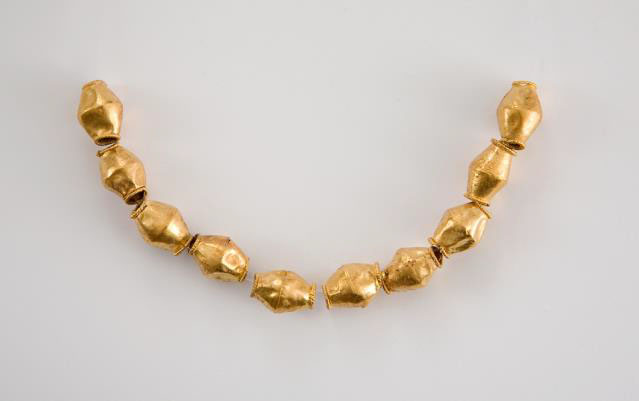
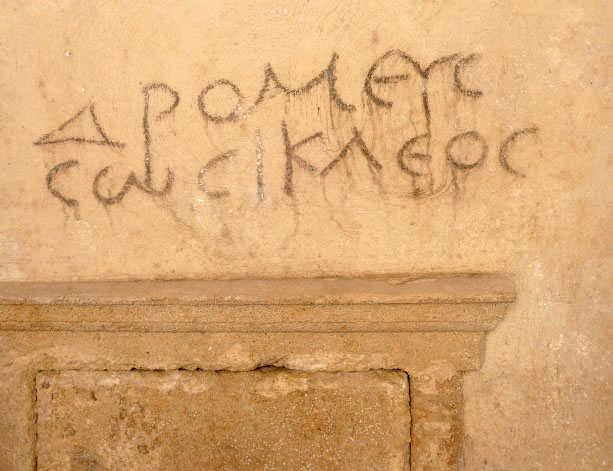
The chamber doorways are bordered with carved sandstone jambs and were found blocked by stone slabs/doors. Over each doorway there were handwritten inscriptions in charcoal or incised into the plaster with the names of one or more of the deceased. According to the names the number of people buried here are fourteen. One more interment was confirmed during the excavation, whose name is not recorded. It had already taken place in the more neglected burial chamber, before plaster could be applied to it. Out of 15 dead people, 7 were women and 3 children. All burials had grave gifts according to the burial customs of the time: clay vases, lamps, alabastra made of alabaster and glass of the core-forming technique, gold coins of Charon, mirrors in straw cases, bone combs, goldcoated clay jewellery as well as real gold jewellery, strigils, toys etc. Twenty-one clay figurines stand out among the offerings, mainly found in burials of women and children.
Loculi are thought to represent the middle social class of Egypt, and tombs with funeral beds the upper class. The spread of this funerary architecture beyond Alexandria is observed in areas under Ptolemaic influence (Cyprus, Cyrenaica, etc.). Today, access to the monument is through the locked entrance on Hatzidaki Street, which is reached via a small staircase in the corridor of the monument. An information sign on the outside informs about the underlying monument.