In the district of Splantzia, the excavations in Daskaloyanni Street in 1989, 1991 and 1997 l, discovered an extensive building complex of a sacred and ritual character. Part of the structure was revealed over the entire width of the street and in the adjacent building plots of Papadopoulos and Kaniamos.
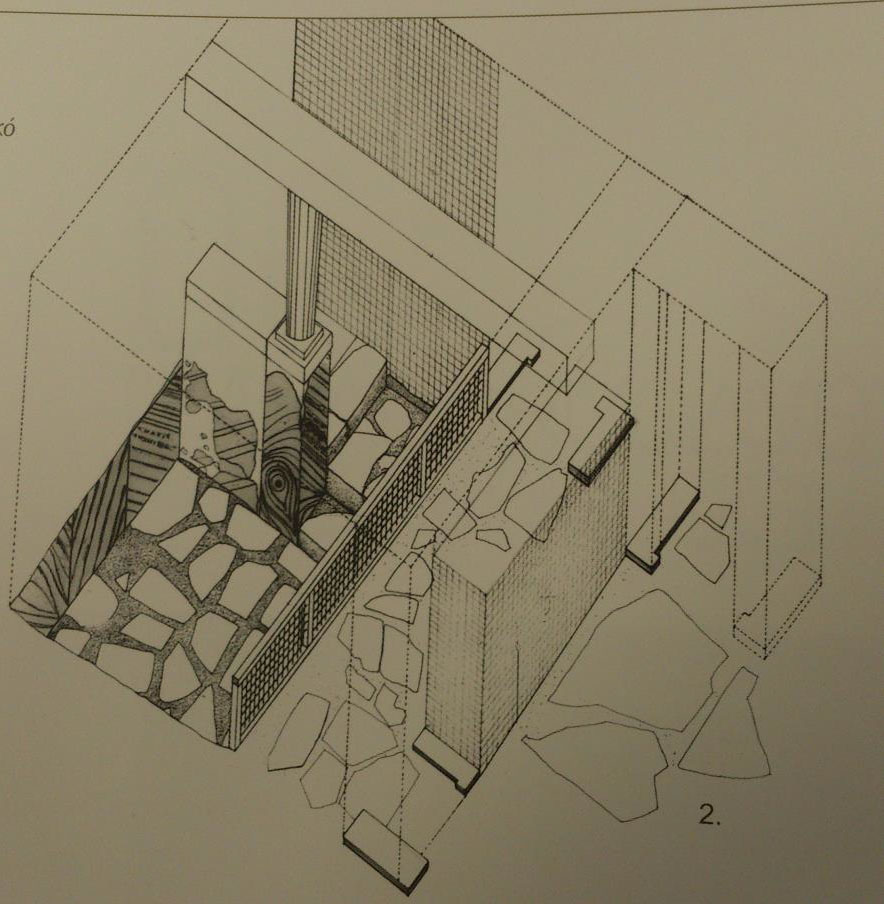
The complex functioned throughout the Neopalatial period (1650-1450 B.C.) with three main refurbishments, evidently after seismic destructions. This may be considered as the focal point of the operation of the whole building complex. This area communicated with the ceremonial Minoan Halls and the chamber with the lightwell at the far end, which are all buried under Daskaloyanni Street.
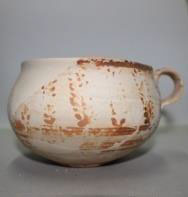
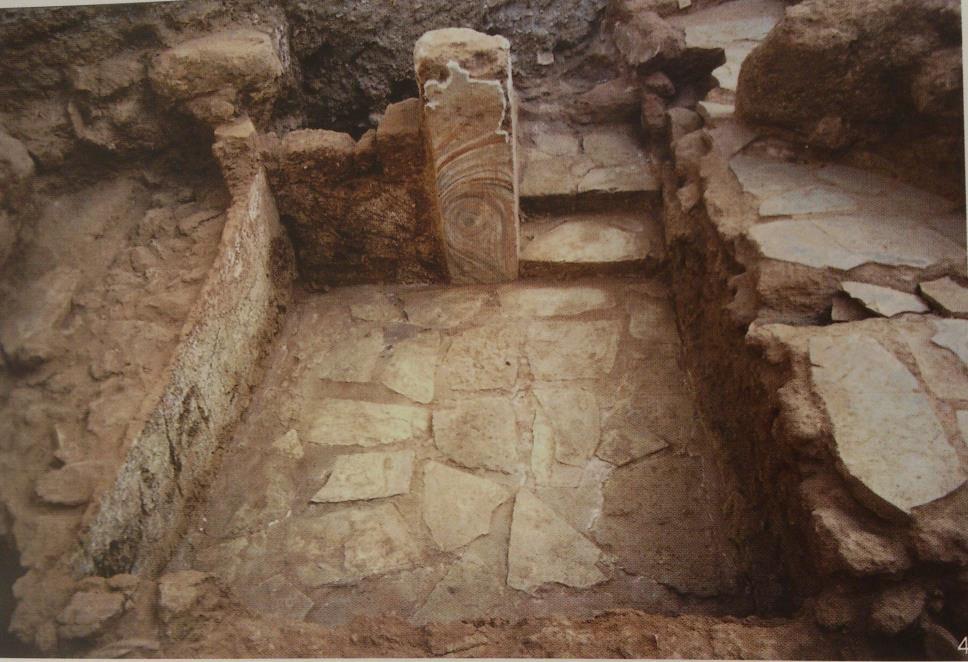
The ‘lustral basin’ is typical of Minoan palatial architecture. This small room usually adjoins Minoan Halls and its very meticulous construction declares its prominent position in the structure. The adyton of Splantzia is the only one to have been found so far in West Crete. It has a square ground-plan and is preserved up to a maximum height of 0.70 m. The descent is made through winding stairs. The steps, and the whole floor of the room are made of hard slabs of limestone with red stucco in the interstices. The walls were fully painted down to the floor, as probably were the adjacent rooms. Each wall was divided low down into squares, decorated with designs imitating marble dadoes in counter-balanced arrangement, as suggested by parts of wall-paintings found in situ. A raised paved walkway to the east served for the passage and standing of people and to provide more light to the sanctuary. In the closed deposit of the room, many handleless conical cups, three deep buckets, the bottom of a painted rhyton on the half-landing, two clay loom-weights and a small part of a schist lid were found.
The adyton was destroyed by a fire that broke out around 1600 B.C. Immediately afterwards, the area was sealed and covered with an earthen floor, thereby transforming the old basement into a new groundfloor room.
At a later stage this area was incorporated into a larger room which was destroyed along with the whole complex in 1450 B.C., the same the period in which House I in the square of Agia Aikaterini and the building complex of the archives in the Vakalunaki plot were destroyed.
The nature of the underground adyton may be dictated by a need for communion with chthonic deities and perhaps is linked to attempts to propitiating them, within the climate of extensive seismic intensity and insecurity, which is typical of the Neopalatial period as a whole.
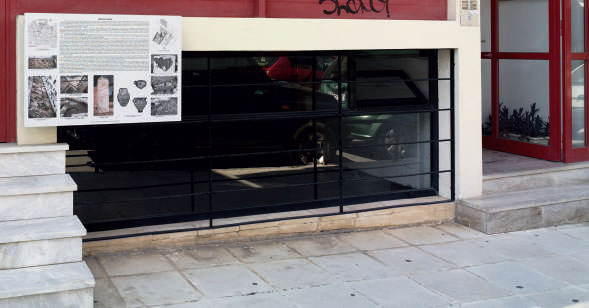
Today only a small part of the Neopalatial building complex of Daskaloyanni Street is visible at the site, in the basement of the building plot of N. Papadopoulos. Parts of eight rooms can be seen, including the well-known adyton or ‘lustral basin’.